A Genuinely Common Florida Issue
With backyard pools common across Clearwater and the rest of the Gulf Coast, pool leaks are a genuinely frequent local issue, not a rare occurrence. Here's how to tell normal evaporation from an actual leak, and what detection actually involves.
Ruling Out Normal Evaporation First
Fill a bucket with pool water, mark the water level inside the bucket and on the pool wall, and place the bucket on a pool step. After 24 hours, compare how much each level dropped. If the pool lost noticeably more than the bucket, that's a real sign of a leak rather than normal evaporation.
Where They Actually Happen
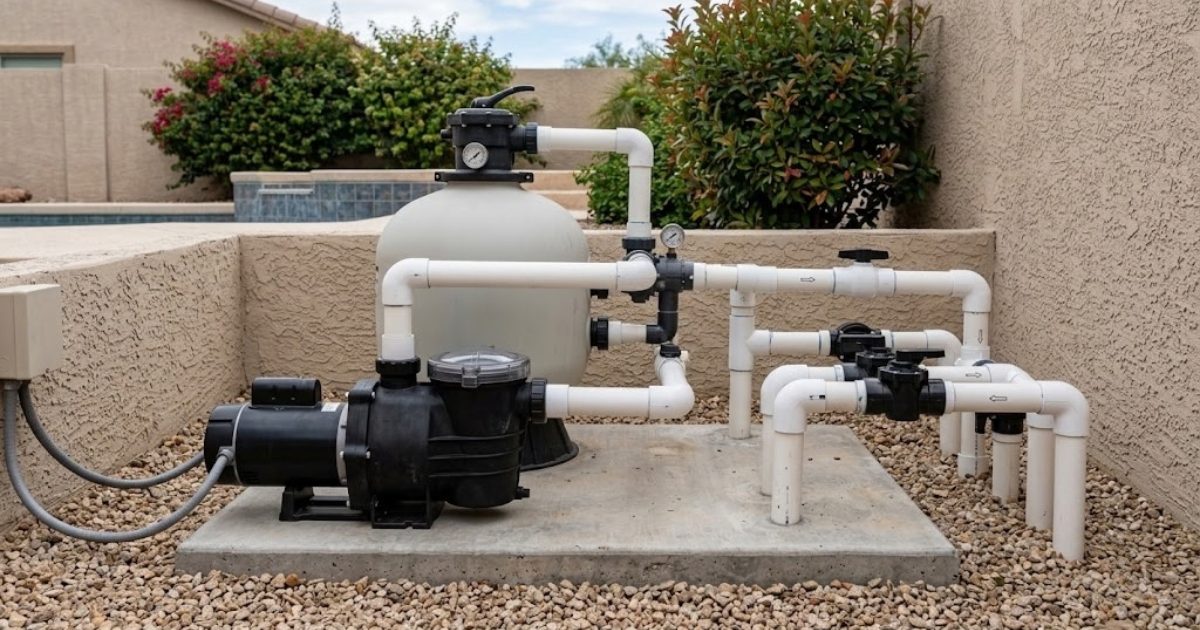
Skimmer housings, light fixtures, and pipe penetrations through the pool shell are the most common leak points, since they're places where different materials meet and can separate slightly over time. Equipment pad plumbing, the visible pipes and valves near the pump and filter, is another frequent source that's often easier to spot.
Two Very Different Problems
A leak in the visible equipment pad plumbing is usually straightforward to find and repair. A structural leak in the pool shell itself or in buried plumbing lines is harder to pinpoint and typically requires specialized underwater leak detection equipment and dye testing to locate precisely.
Pressure Testing The Full System
Professional pool leak detection involves pressure testing each plumbing line individually to isolate which one is actually losing pressure, combined with dye testing at suspected structural points to visually confirm water movement. This process locates the leak before any repair work begins, rather than guessing.
Beyond Just The Water Bill
Beyond wasted water, a leak around a pool shell can undermine the surrounding soil and deck over time, given how much of the Gulf Coast sits on sandy, loose ground. What starts as a slow leak can eventually affect deck stability if left unaddressed long enough.
An Overlooked Sign Worth Watching
A pool losing water faster than normal often needs more frequent chemical rebalancing too, since fresh water dilutes existing chemical levels. If you notice you're adding chemicals more often than usual alongside water loss, that's additional supporting evidence of a real leak, not just evaporation.
Why Summer Can Mask Or Mimic A Leak
Florida's summer heat and afternoon storms both affect how quickly a pool naturally loses or gains water, which can make a real leak harder to distinguish from normal seasonal variation without a controlled test like the bucket method. Testing during a period of stable weather gives a more reliable read.
Do They Change The Math
A screened pool enclosure reduces debris and slightly slows evaporation compared to an open pool, which means an enclosed pool losing water at the same rate as a typical unenclosed pool is a slightly stronger signal of an actual leak rather than normal evaporation.
What To Expect Once A Leak Is Found
Equipment pad leaks are typically repaired same-day once located. Structural shell leaks may require specialized underwater patching or, in more significant cases, professional resurfacing, which naturally takes longer to schedule and complete than a straightforward equipment repair.
Does Pool Type Affect Leak Risk
Saltwater pool systems don't inherently leak more than traditional chlorine pools, but the salt cell and its associated plumbing add a few more connection points where a leak could develop. It's not a reason to avoid a saltwater system, just one more area worth including in a thorough leak inspection.
The Short Version If You're Skimming
The bucket test tells you whether you actually have a leak versus normal evaporation, most leaks trace back to skimmers, lights, or equipment pad plumbing, and pressure testing plus dye testing locate the exact point before any repair begins.
What Helps Us Diagnose Faster
Having a rough sense of how much water you're losing per day or week, along with whether you've noticed any wet spots around the equipment pad or pool deck, helps us prioritize where to start looking rather than beginning the inspection from scratch.
Why We Won't Guess Over The Phone
Pool leak repair cost varies enormously between a simple equipment fitting and a structural shell repair, which is exactly why we inspect and locate first rather than quoting a range that would be misleading in either direction for your specific situation.
Common Questions
Yes, evaporation is real and varies with weather. The bucket test is the simplest way to tell normal evaporation from an actual leak.
Over enough time, yes, especially in sandy Gulf Coast soil where water erosion around a leak point can undermine nearby structures.
Test during a stable, dry period if possible, since heavy rain or storms can skew the bucket comparison and make results less reliable.
An equipment pad leak is often fixed same-day. A structural shell leak can take longer to schedule and complete, depending on the repair method needed.
In most cases yes, though we'll advise you if the leak location or repair method genuinely requires draining part of the pool first.
Generally yes, since aging seals, fittings, and shell surfaces are more prone to developing small gaps over time than recently built pools.
It's more of a debris and evaporation benefit than a leak-prevention measure by itself, though it can indirectly help by reducing wear from debris.
In some cases, yes, particularly if water is migrating through soil toward a home's foundation or nearby buried utility lines.
For an older pool, an occasional proactive check can catch a slow leak before it becomes a larger structural concern.
Our focus is the plumbing and leak detection side specifically, and we can point you toward pool equipment specialists for other repairs.
Our focus here is residential service, though feel free to call and ask about your specific situation.
Related Services
A pool leak is rarely an emergency in the moment, but it's worth addressing before it becomes a bigger structural concern, and any repair work should still follow Florida Building Code plumbing standards regardless of how minor the fix seems.