Why Established Neighborhoods See This More
Neighborhoods with decades-old trees, common across Dunedin, Belleair, and other established Pinellas County communities, see root intrusion far more often than newer developments with young landscaping. It's a genuine, predictable pattern, not bad luck, and understanding how it actually progresses helps explain why some fixes work and others don't.
Moisture Draws Them In
Tree roots grow toward moisture, and a sewer line carrying wastewater is a reliable, consistent moisture source underground. Roots don't need a large opening to start, a hairline crack at a pipe joint is enough for a root to find and gradually exploit.
From Small Intrusion To Full Blockage
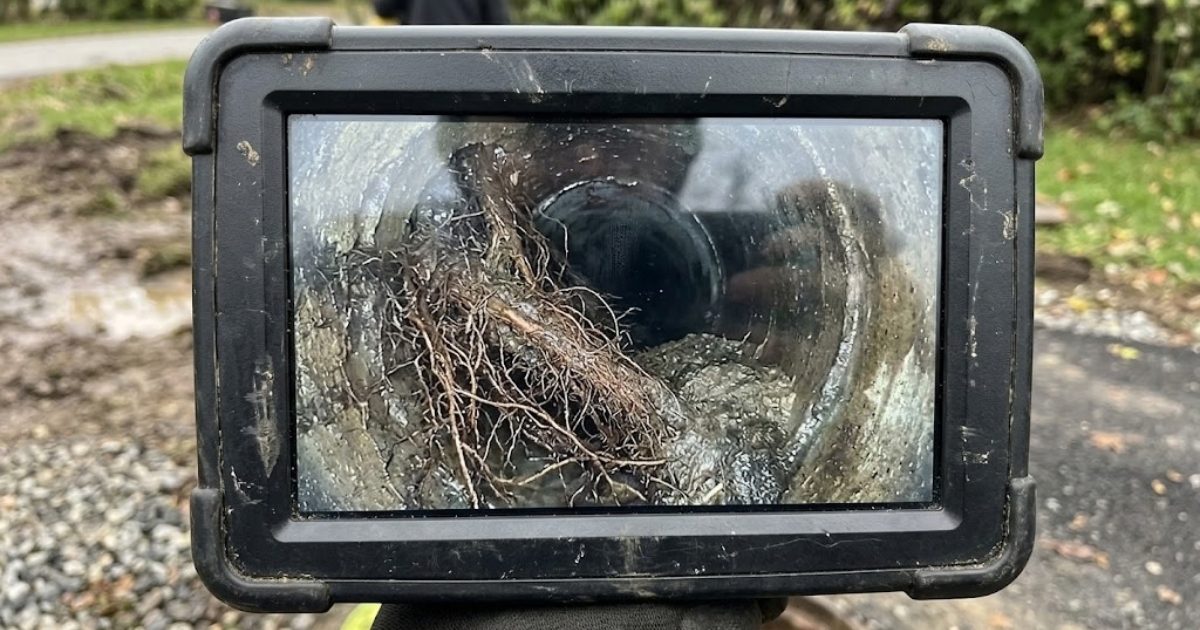
Once a root finds its way into a pipe, it grows inside the flow path, catching debris and paper that would otherwise pass through freely. Over months and years, that root mass grows larger, catching more material each time, until it eventually causes a full blockage rather than just a slow drain.
What Homeowners Notice First
Recurring clogs in the same area of the house, slow drainage that seems to affect multiple fixtures at once, and gurgling sounds when using water are all signs consistent with root intrusion rather than a simple isolated clog.
Camera Inspection Is The Only Way To Know For Sure
A sewer camera inspection is the only reliable way to confirm root intrusion versus another cause of recurring clogs. It shows exactly where roots have entered the line and how extensive the intrusion actually is before recommending a fix.
Cutting Vs. Replacement
Mechanical root cutting combined with hydro jetting clears existing root mass and is often sufficient for isolated intrusion points. If the line has multiple intrusion points or the pipe itself shows significant corrosion alongside the roots, replacing the affected section is usually the more honest long-term recommendation instead of repeating a temporary cut every year or two.
Why We're Cautious About Them
Foaming root-killing chemicals are marketed as a maintenance solution, and they can slow regrowth in some cases, but they don't address roots that have already caused structural cracking in a joint. Relying on them alone as a long-term fix for an already-compromised line often just delays a more thorough repair rather than replacing the need for one.
Why Waiting Costs More Later
Root intrusion rarely reverses on its own, and each growing season gives existing roots more opportunity to expand inside a compromised joint. Addressing it once symptoms first appear is almost always less invasive and less costly than waiting until a full blockage forces an emergency call.
A Practical Note For Replanting
If a line has already needed root-related repair, choosing replacement trees with less aggressive root systems, or planting further from the sewer line's actual path, reduces the odds of the same problem recurring in the same spot years later.
Why Knowing Its Path Matters
Many homeowners have never actually confirmed where their sewer lateral runs underground, which makes it harder to judge whether a specific tree poses a real risk. A camera inspection combined with locating equipment can map the line's actual path, turning a guess about root risk into real, specific information.
The Short Version If You're Skimming
Roots grow toward the moisture inside a sewer line and exploit any small crack at a joint, gradually catching debris until a full blockage forms. A camera inspection confirms the extent, and hydro jetting or, for more severe cases, section replacement are the real fixes.
A Reasonable First Step
If you've noticed recurring clogs but aren't sure whether roots are actually involved, a camera inspection is a low-commitment way to get a real answer before deciding on any larger fix. It's often the fastest way to move from guessing to actually knowing.
Thinking About The Whole Line's Future
Once one section of a line shows root intrusion, it's worth asking about the rest of the line's likely condition too, since the same age and joint type usually extends the full length, not just the section that happened to show symptoms first.
Common Questions
It can help going forward, but existing roots already inside the pipe won't disappear on their own and still need to be cleared.
That depends on your specific policy. We can provide documentation from a camera inspection if you need to file a claim.
They can slow regrowth after a line has been cleared, but they're a maintenance tool, not a fix for a joint that's already structurally cracked.
Trees with less aggressive, shallower root systems reduce risk, and in general, planting further from the line's actual path matters more than the specific species.
Every few years is reasonable for a home with mature trees nearby, simply to catch early intrusion before it becomes a full blockage.
Florida's warm, wet climate supports vigorous root growth nearly year-round, which can mean faster progression than in climates with a genuine winter dormant season.
A physical root barrier installed near the line during repair can meaningfully reduce future intrusion risk from nearby trees.
It's far less common than with older clay or cast iron, since PVC has fewer joints and tighter seals, though it isn't entirely immune if a joint is damaged.
Yes, choosing a species with a less aggressive root system and planting further from the old line path reduces the odds of a repeat issue.
No, the risk comes specifically from larger, deeper root systems that trees develop, not typical grass or small shrub landscaping.
General guidance suggests planting well clear of the line's path, with the exact safe distance varying by the specific tree species' mature root spread.
Related Services
Mature trees are worth keeping, but it's worth knowing what they can do to an aging sewer line underneath them, and any repair should still meet Florida Building Code plumbing standards regardless of the cause.