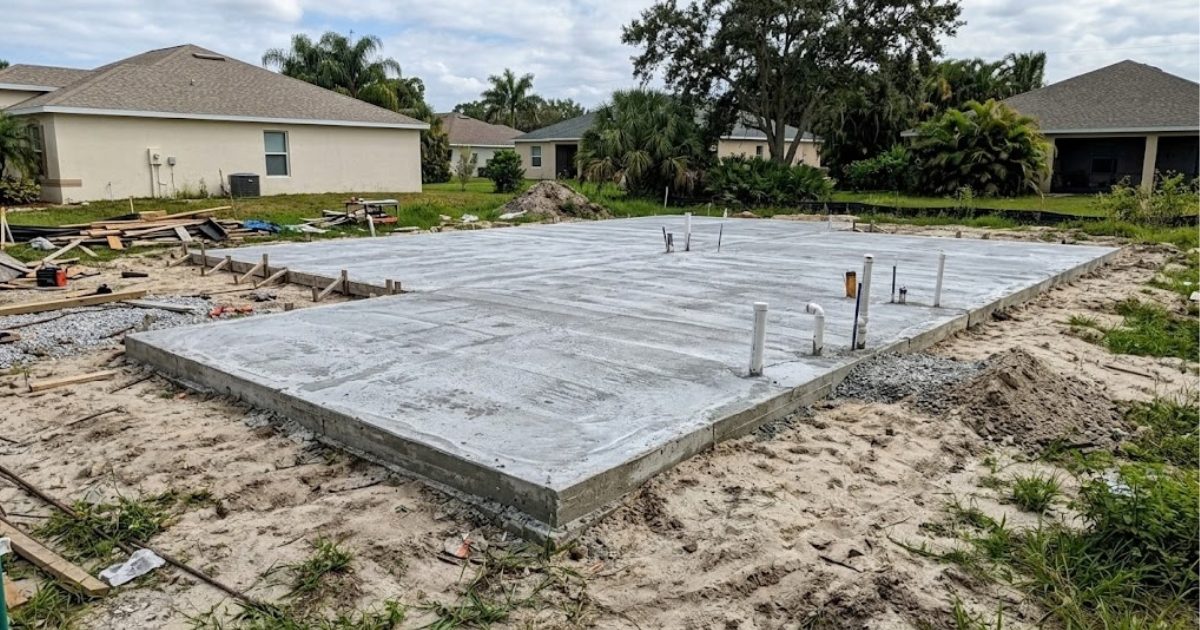
A Florida-Specific Problem
Unlike much of the country, most Florida homes, including nearly every home in Clearwater, are built on a concrete slab foundation with no basement or crawlspace underneath. That construction style is exactly why slab leaks are a genuine, recurring issue here rather than a rare or unusual event.
Pipes Run Through Or Under The Slab
In slab-on-grade construction, water supply lines commonly run either through the concrete slab itself or in the soil directly beneath it. Over years, that pipe can develop a leak from corrosion, ground shifting, or simple age, and because there's no basement to inspect, the leak develops invisibly until symptoms show up elsewhere.
Why Detection Isn't Always Obvious
Much of the Clearwater area sits on loose, sandy soil with a high water table close to the surface. When a slab leak develops, that sandy soil around it can wash away quickly, which sometimes hides visible signs at the surface even while real damage continues underneath.
What Homeowners Actually Notice First
A warm spot on tile or flooring, often over a hot water line leak, is one of the most distinctive slab leak signs. An unexplained jump in your water bill, the sound of running water when every fixture is off, or a persistently damp spot on carpet or flooring near an exterior wall are the other common early indicators.
Acoustic Listening And Pressure Testing
A slab leak is located using acoustic equipment that listens for the specific sound signature of water escaping under pressure, combined with pressure testing to isolate which section of line is actually affected. This lets a technician pinpoint the leak's location before any concrete is opened, rather than guessing and cutting broadly.
Repair Options Once It's Located
Once located, a slab leak can sometimes be repaired with a small, targeted access point rather than opening the entire slab. In some cases, particularly with older or more compromised lines, rerouting the water line above the slab is a more practical long-term fix than repeatedly repairing the same section underground.
What Actually Drives The Price
The location of the leak relative to the home's layout, whether it's under a load-bearing wall or in open floor space, and whether one leak or a broader pattern of aging pipe is involved all affect the real cost. A single accessible leak in an easily reached section costs far less to address than a leak requiring careful work around structural elements.
Can Slab Leaks Be Prevented Entirely
Not entirely, since they're partly a function of pipe age and ground conditions outside anyone's control. Reducing water pressure to a reasonable range, addressing hard water with a softener to slow internal pipe corrosion, and catching small leaks early through regular water bill monitoring all meaningfully reduce the odds of a severe slab leak catching you by surprise.
When One Slab Leak Suggests More
If a home has already had one slab leak, it's worth having the rest of the under-slab plumbing evaluated, since the same age and water conditions that caused one failure often affect the rest of the system similarly. Catching a second developing leak early is far preferable to another surprise repair a year or two later.
Where We See This Most
Homes built in the mid-20th century, common across parts of Clearwater and neighboring cities, are more likely to show slab leaks simply because their original supply lines have had more decades to develop the kind of wear that eventually leads to a leak, regardless of the specific pipe material used originally.
The Short Version If You're Skimming
Slab leaks happen because supply lines run through or under the foundation in Florida's slab-on-grade construction, and sandy soil can hide the visible signs even as real damage develops. Acoustic and pressure testing locate the leak before any concrete needs to be opened.
What To Do Before We Arrive
If you suspect an active slab leak, note where you've seen warm spots or dampness, and avoid running unnecessary water in the meantime. That information helps narrow the search, and it costs nothing to gather while waiting for a technician.
Why Sooner Is Genuinely Better Here
The gap between a slab leak's first faint symptom and its eventual visible damage can stretch for months, and every one of those months is an opportunity to catch it with a small repair instead of a much larger one.
Common Questions
It can become one if left unaddressed, since it can cause structural damage and mold over time. It's worth addressing promptly once suspected.
Not necessarily. Acoustic and pressure-testing methods usually locate the leak precisely enough to limit any opening to a small, targeted area.
Over enough time, yes, especially given the sandy soil common in this area. That's part of why addressing a suspected slab leak promptly matters beyond just the water bill.
It's worth having the rest of the under-slab plumbing evaluated, since whatever conditions caused one failure often affect nearby sections of pipe similarly.
Sometimes, through a proactive pressure test, though most slab leaks are actually found because a symptom, like a bill spike, prompted the call.
Coverage varies widely by policy, and it's worth checking your specific policy language for how it treats detection versus repair costs separately.
Sometimes, particularly with a larger leak, though many slab leaks are subtle enough that pressure changes aren't the first sign homeowners notice.
Copper and older galvanized supply lines both show up in slab leak calls, though the specific failure pattern differs somewhat between the two.
It's uncommon but not impossible, usually tied to an installation defect rather than the gradual wear that causes most slab leaks in older homes.
Related Services
Slab leaks are a genuine part of owning a Florida home, but they don't have to mean tearing up your floor to find one. A quick call at the first sign, a warm spot, a rising bill, is worth it before those signs turn into a bigger repair, and any repair itself follows Florida Building Code plumbing standards.