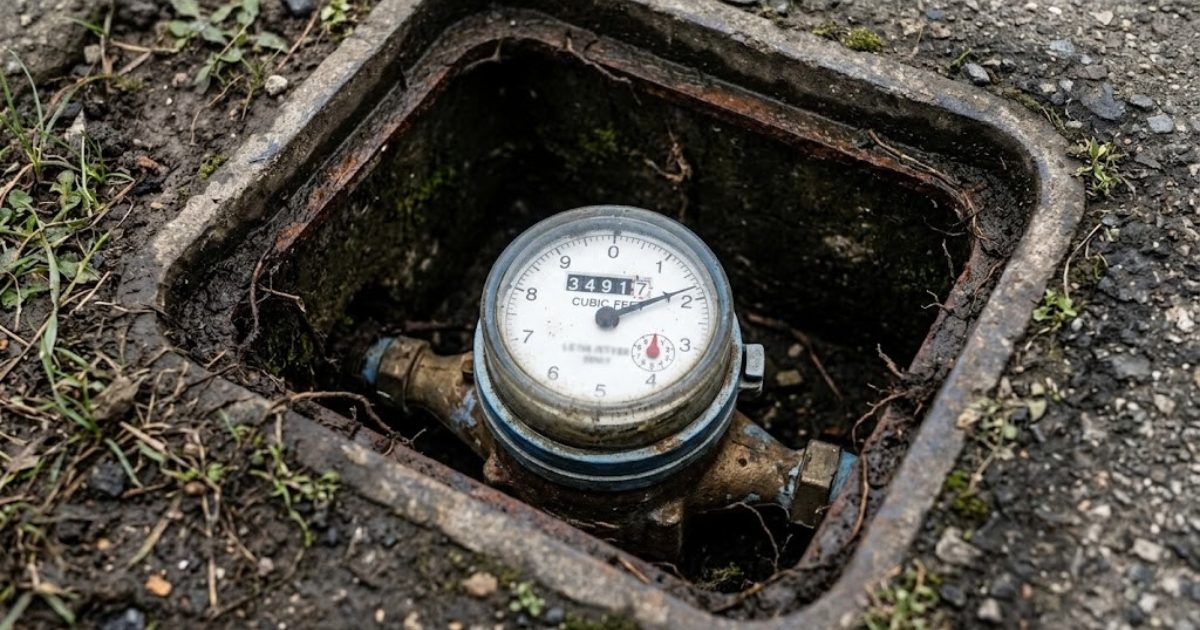
This Is A Real Diagnostic Signal
A water meter that keeps turning even when every fixture in the house is off is one of the clearest, most reliable signs of a hidden leak somewhere in your system. Here's how to check it yourself and what the result actually tells you.
The Simple Test Anyone Can Do
Turn off every fixture and appliance that uses water, including ice makers and irrigation systems. Locate your water meter, usually near the street or at the edge of your property, and note the reading. Wait 20 to 30 minutes without using any water, then check the reading again. Any change means water is flowing somewhere you're not seeing it.
Confirmed Leak, Unknown Location
A moving meter confirms a leak exists, but it doesn't tell you where. The leak could be inside the house, under the slab, or even in the supply line between the meter and the house, all of which require different diagnostic approaches to actually locate.
Where To Look First
A running toilet is the most common cause of a moving meter and the easiest to rule out, listen closely at each toilet or add food coloring to the tank to see if it appears in the bowl without flushing. If every toilet checks out, the leak is more likely in a supply line, either inside a wall, under the slab, or underground between the meter and the house.
Beyond The Toilet Check
If you've ruled out toilets and the meter is still moving, that's the point to call a professional rather than start guessing at walls or flooring. Acoustic leak detection equipment can locate the actual source without unnecessary digging or demolition.
The Bill Isn't The Only Risk
Beyond the water bill itself, an undetected leak, especially a slab or underground leak, can cause structural damage, mold, and soil erosion around a foundation over time. The cost of finding it early is almost always lower than the cost of the damage it eventually causes.
A Commonly Overlooked Source
If your home has an irrigation system, a leak in an underground zone valve or line can also cause a moving meter without any obvious sign indoors. It's worth checking whether your irrigation system is on the same meter as your home's domestic water before assuming the leak is inside the house.
What A Real Comparison Looks Like
Comparing your last few months of billed usage, not just the total dollar amount, gives a clearer picture than the bill total alone, since utility rates can change independently of actual usage. A sudden jump in gallons used, even if the dollar increase looks modest, is worth investigating.
A Newer Tool Worth Knowing About
Some Pinellas County utilities now offer smart meter data homeowners can check online, sometimes showing hourly usage patterns rather than just a monthly total. If your utility offers this, a spike during hours when the house should be empty is another useful way to confirm a hidden leak without waiting for a full billing cycle.
A Less Common But Real Possibility
Occasionally, the leak is in the service line between the street meter and the house itself, technically outside the home but still the homeowner's responsibility to repair in most cases. This is less common than an indoor leak but is exactly the kind of thing acoustic detection is built to isolate.
Why It's Worth Keeping Records
Some Pinellas County utilities offer a one-time high-bill adjustment for a documented, repaired leak, but they typically require proof the leak was found and fixed. Keeping the invoice from whoever locates and repairs the leak is worth doing specifically for this reason, beyond just your own records.
The Short Version If You're Skimming
A meter that keeps moving with everything off confirms a leak exists somewhere, though not where. Rule out toilets first, then call for acoustic detection if the meter is still moving, since waiting risks real structural and mold damage beyond just the water bill.
Keep A Record Of Your Test
Writing down the exact meter readings and times from your own test gives a technician a useful starting reference, and it's also useful documentation if you end up requesting a high-bill adjustment from your utility later.
Common Questions
It's rare. A truly still meter after 20-30 minutes of no water use is a reliable no-leak indicator, and a moving one is a reliable sign something is running somewhere.
Yes, it just involves reading the dial, no tools or access to plumbing required.
Yes, if it shares a meter with your home. Checking whether your irrigation zones are off during the test is worth doing before assuming the leak is indoors.
Yes, that's a real possibility and still generally the homeowner's responsibility to repair, which is exactly the kind of leak acoustic detection is built to pinpoint.
Promptly, since an undetected leak keeps costing money and risking damage every day it goes unaddressed.
Rarely, but a stuck fixture valve or a running irrigation zone can sometimes mimic a leak, which is part of why ruling out the obvious causes first matters.
A quick check every few months is a reasonable habit, since it can catch a slow leak well before it shows up as a major bill spike.
Homes on private wells typically don't have a utility meter, so a different diagnostic approach, usually a pressure tank cycle check, applies instead.
Either is reasonable, but a plumber can actually locate and fix the leak, while the utility mainly confirms usage data.
Related Services
A moving meter is useful information, not a diagnosis by itself. Ruling out the easy explanations first saves everyone time, and any repair that follows is still completed to Florida Building Code plumbing standards.