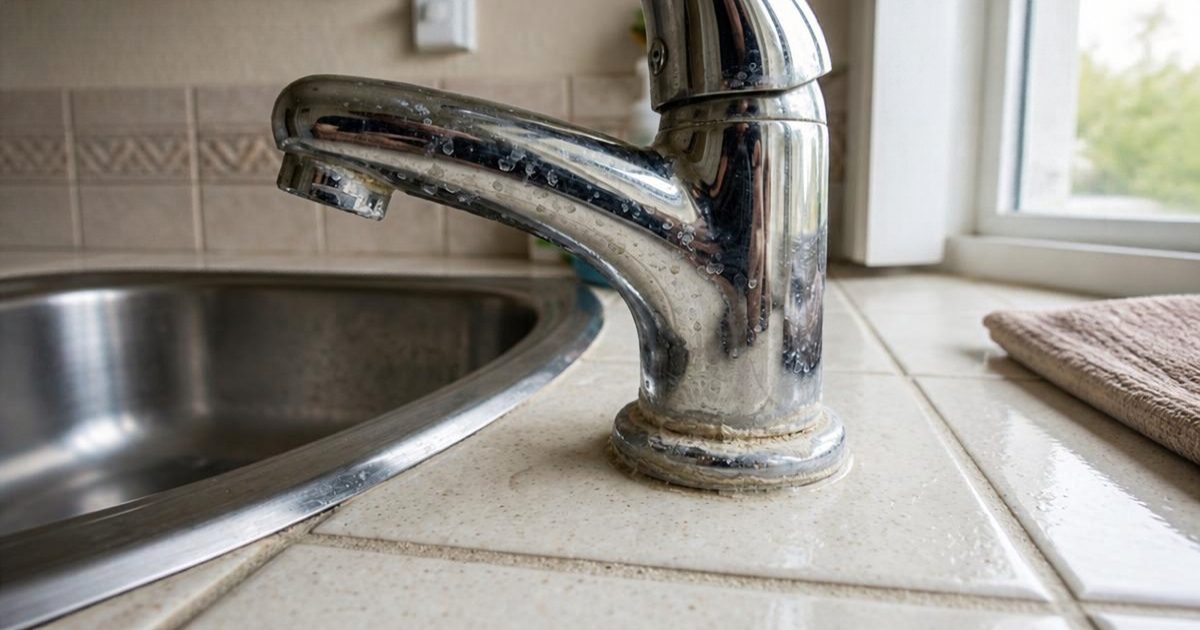
It's Not Just You
If you've noticed white, crusty buildup around your faucets, spots on clean dishes, or soap that never quite rinses away, you're not imagining it. Hard water is a genuine, well-documented issue across Clearwater and the rest of Pinellas County, and it's the single most common plumbing complaint we hear from local homeowners. It's also one of the most misunderstood, since a lot of general advice about hard water online doesn't reflect what's actually happening in Gulf Coast groundwater specifically.
Where The Minerals Actually Come From
Florida's Gulf Coast sits over limestone aquifers, and as groundwater moves through that limestone, it picks up dissolved calcium and magnesium. That mineral load is what makes water "hard." It's not a contamination issue and it's not unsafe to drink, it's simply a mineral concentration that's higher here than in a lot of the country.
The Real Cost Of Ignoring It
Hard water doesn't just leave cosmetic spots. Mineral scale builds up inside water heaters and coats heating elements, forcing them to work harder and fail sooner. It narrows pipe diameter over years, reduces water pressure, and shortens the working life of washing machines, dishwashers, and coffee makers. None of that happens overnight, which is exactly why it's easy to ignore until a bigger repair shows up.
How Hardness Is Actually Measured
Water hardness is measured in grains per gallon (GPG). Anything above about 7 GPG is generally considered hard, and a lot of Pinellas County groundwater tests well above that. A real water test, not a guess, is the only way to know your actual number and size a fix correctly.
Softening, Not Just Filtering
A basic filter can improve taste and clarity, but it doesn't remove hardness minerals. Softening does, either through a salt-based ion exchange system or a salt-free conditioner, depending on your household's needs and how severe the hardness actually tests. Whole-home installation is the only approach that protects every fixture and appliance in the house, not just the kitchen tap.
Why This Matters More Here Than Elsewhere
Because our water comes from the same regional aquifer system, hardness is a consistent, ongoing condition here rather than a seasonal or occasional issue. That's part of why Water Softener Installation & Repair is consistently the single highest-demand plumbing service in Clearwater specifically.
Salt-Based vs. Salt-Free Softening
A salt-based system uses ion exchange to physically remove hardness minerals from the water, which is the most effective approach for genuinely hard Gulf Coast water and requires periodic salt refills. A salt-free conditioner alters the mineral structure so it's less likely to form visible scale, without actually removing the minerals, which appeals to households that want to avoid maintaining a salt tank but may see less dramatic results on severely hard water.
Why A One-Size System Doesn't Work
A softener sized for a two-person household won't keep up with a family of five running multiple showers, a dishwasher, and laundry through the same system daily. Undersizing is one of the most common reasons a newly installed softener still leaves noticeable hardness symptoms, which is why we size based on your actual household's water usage and tested hardness level, not a generic default.
What Owning A Softener Actually Involves
A salt-based system needs its brine tank refilled periodically, how often depends on household size and hardness level, along with an occasional check of the resin bed's condition after several years of use. It's a modest ongoing commitment compared to the cumulative cost of ignoring hard water entirely, and most homeowners find it becomes routine within the first few months.
What If You Don't Own The System
If you rent and suspect hard water is an issue, a landlord isn't always required to install a softener, but pointing to specific appliance wear or fixture damage in writing can support a reasonable request. It's worth documenting the issue either way, even if the fix ultimately isn't yours to make.
The Short Version If You're Skimming
Hard water here comes from real limestone aquifer geology, it genuinely shortens appliance and pipe life over years, and a properly sized whole-home softener is the only fix that actually removes the minerals rather than masking them. Everything else in this guide builds on those three points.
What A First Call Actually Looks Like
If you're ready to address hard water in your own home, a first call typically starts with a few quick questions about your household size and any symptoms you've noticed, followed by scheduling a free on-site water test. There's no obligation tied to that first test, it's simply the starting point for an honest recommendation.
Common Questions
No, it's a mineral concentration issue, not a safety issue. It's simply harder on your plumbing and appliances over time.
No, pitcher filters address taste and some contaminants but don't remove hardness minerals. A real softening system is the only fix.
A quick water test and a look at your existing system, if you have one, tells us which. Call and we can walk through it.
Yes, over time. Mineral scale builds up on internal heating elements and valves in both appliances, which is a genuine, if slow, contributor to earlier appliance failure in hard water homes.
A well-maintained salt-based system commonly lasts 10 to 15 years, with the resin bed being the component most likely to eventually need replacement.
Related Services
Hard water is a genuine local condition, not a generic Florida talking point, and it's worth addressing directly rather than living with the slow damage it causes. A single water test is a small first step compared to the years of accumulated wear it can help you avoid, and it costs you nothing but a phone call to find out where you actually stand, so there is really no good reason at all left to keep guessing about it, or to keep putting off a quick, no-obligation phone call to find out exactly where your own home actually and honestly stands on this today, right now, once and for all, with every install we do still meeting Florida Building Code plumbing standards.
Ready To Test Your Water?
Call for a free on-site hardness test and a flat quote.
☎ Call (727) 931-8107